
When life feels overwhelming, the body often knows it before the mind does. Your shoulders become tense, your breathing gets shallow, sleep feels harder, and even small things can feel exhausting.
Learning how to calm the nervous system has therefore become an important part of modern well-being. One practice that has attracted growing interest is vagus nerve stimulation through sound therapy.
From humming and chanting to calming music and sound meditation, sound can become a gentle way to slow down, reconnect with the breath, and create a greater sense of ease.
But what exactly is the vagus nerve, and can sound really influence it?
What Is the Vagus Nerve?
The vagus nerve is the tenth cranial nerve and one of the body’s most important communication pathways. It travels from the brainstem through the neck and into areas of the chest and abdomen.
It is involved in several automatic functions, including heart rate, breathing, digestion, and aspects of the body’s stress response.
The Vagus nerve is known as the wandering nerve because it has multiple branches that diverge from two thick stems rooted in the cerebellum and brainstem that wander to the lowest viscera of your abdomen touching your heart and most major organs along the way. Vagus means wandering in Latin. The words vagabond, vague, and vagrant are all derived from the same Latin root.
The vagus nerve is closely associated with the para-sympathetic nervous system, which helps the body move towards states of rest, recovery, and digestion.
This is why the vagus nerve is often discussed in conversations around stress management and nervous system regulation.
However, it is important to understand that you cannot simply “activate” the vagus nerve with one magic sound or frequency. The nervous system is complex, and sound is better understood as one possible tool for supporting relaxation.
How Does Sound Therapy Work?
Sound has been used for relaxation, meditation, prayer, and emotional expression for thousands of years.
Think about the feeling of listening to a familiar song after a difficult day. Or the calming rhythm of someone singing softly. Or the stillness that can follow a few minutes of chanting.
Sound can influence attention, mood, breathing patterns, and emotional state. Some forms of sound therapy combine these effects with slow, deliberate breathing and focused awareness.
Together, these practices may help create conditions associated with relaxation.
Humming and the Vagus Nerve
One of the simplest practices is humming.
When you hum, you naturally create a sustained vibration while breathing out. The sound also brings your attention towards the throat, face, breath, and body.
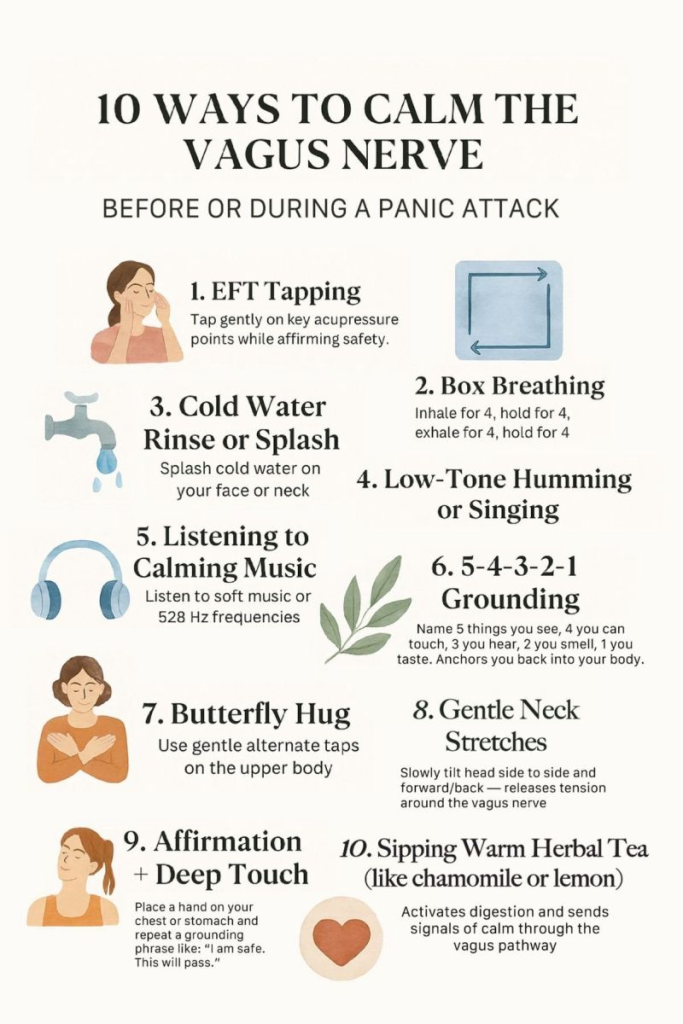
Try taking a comfortable breath in and making a gentle “mmm” sound as you slowly breathe out.
There is no need to hum loudly. In fact, softer is often better if your intention is relaxation.
Continue for two to five minutes and notice what changes in your breathing and body.
Chanting and Mantras
Chanting involves repetition, rhythm, breath, and sound.
Whether you choose a traditional mantra, a prayer, or a simple repeated sound, the practice can give the mind a steady point of focus.
The combination of repetitive sound and slower breathing may help shift attention away from constantly changing thoughts.
For many people, chanting also carries emotional or spiritual meaning, which can make the practice feel more personal.
Singing as a Nervous System Practice
You do not have to be a trained singer to experience the simple pleasure of singing.
Singing naturally involves controlled breathing and vocalisation. It can also be expressive, social, and joyful.
Try singing along to a song you love when you feel mentally tired. Instead of focusing on whether you sound good, pay attention to your breathing and how your body responds.
Sometimes wellbeing can be as uncomplicated as giving yourself permission to make a little noise.
Calming Music and Soundscapes
Music can have a powerful effect on our emotional state.
Slow instrumental music, nature sounds, ambient soundscapes, and other gentle audio may help create a calmer environment, particularly during meditation, yoga, relaxation, or bedtime routines.
There is no universal “best frequency” for vagus nerve stimulation. Claims that a particular frequency will directly activate the vagus nerve or heal a specific condition should be approached carefully.
Your personal response matters.
If a particular sound helps you feel calm and present, it may have a useful place in your wellness routine.
A Five-Minute Sound Therapy Practice
You can experiment with sound therapy without complicated equipment.
Find a comfortable place and try this simple practice:
1. Arrive.
Sit comfortably and notice your body. There is nothing you need to change immediately.
2. Breathe.
Take a slow, comfortable breath in and allow your exhalation to be slightly longer.
3. Hum.
As you breathe out, make a soft humming sound. Repeat for several breaths.
4. Listen.
After a few minutes, stop humming and simply notice the sounds around you.
5. Pause.
Take a final minute to sit quietly and notice how you feel.
You may feel calmer. You may feel exactly the same. Both are completely okay.
The purpose is not to force a particular response. It is to create a small space for awareness and rest.
Can Sound Therapy Help With Stress?
Sound therapy may be useful as a complementary relaxation practice, but it should not be presented as a replacement for professional medical or mental health care.
Research into vagus nerve stimulation, music-based interventions, breathing practices, and nervous system regulation continues to develop. Individual responses can vary.
If you are dealing with persistent anxiety, depression, panic, trauma-related symptoms, severe sleep difficulties, or another health concern, consider speaking with an appropriately qualified healthcare professional.
Sound therapy can sit alongside professional care as a gentle wellbeing practice.
Soulpetrol Approach to Sound and Well-being
At Soul petrol, well-being does not have to mean constantly fixing yourself.
Sometimes it means slowing down enough to hear yourself.
A few minutes of humming. A familiar song. A quiet mantra. The sound of rain. A moment of silence after music ends. These small experiences can become rituals that help you pause in the middle of a busy day.
The vagus nerve is only one part of a much larger nervous system. There is no single sound that works for everyone, and there is no need to turn relaxation into another performance. Instead, experiment.
Find the sounds that make you feel grounded. Notice how your breathing changes. Pay attention to what your body is telling you.
And give yourself permission to slow down.
Because sometimes, the first step towards feeling better is not another thing to do.
It is simply taking a moment to listen.
Frequently Asked Questions
Does humming stimulate the vagus nerve?
Humming involves vocalisation, breathing, and vibration around the throat and face. It may support relaxation, but it should not be described as a guaranteed or direct method of vagus nerve stimulation. It is medically proven sound therapy and sound baths improves vagus nerve activity.
What sound is best for vagus nerve stimulation?
There is no scientifically established single sound or frequency that is universally best for vagus nerve stimulation. Humming, chanting, singing, and calming music may be explored as relaxation practices.
How long should I listen to sound therapy?
There is no universally prescribed duration for general wellness use. You can start with five minutes and gradually find a duration that feels comfortable for you.
Can sound therapy reduce stress?
Sound and music may help some people relax and regulate their emotional state. Individual responses vary, so it is useful to treat sound therapy as a complementary wellness practice rather than a guaranteed treatment for stress.
Can I practice sound therapy at home?
Yes. Simple practices such as humming, chanting, singing, mindful listening, and listening to calming music can be incorporated into an everyday routine without specialised equipment.
 Pooja is a Spiritual Healer, Certified Reiki Master and a Past Life Regression Therapist. With years of experience in the transformative world of Spiritual Healing, she plays a key role in guiding individuals through their healing journeys and helping them navigate life's pivotal moments. Pooja loves to document spiritual stories here.